Grow Flowers from Seed
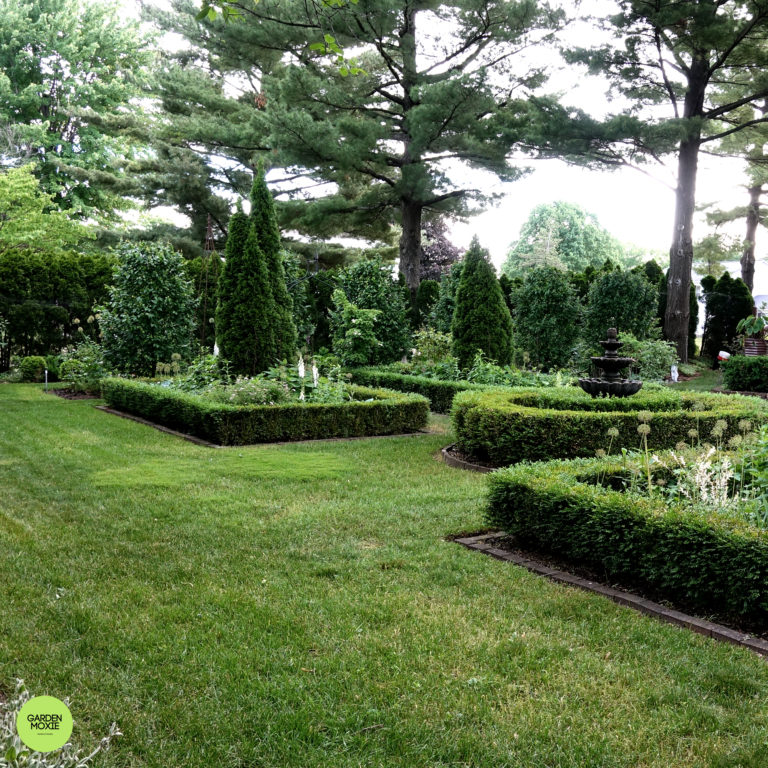
A Garden Built on Choice
Grow Flowers from Seed
Every spring arrives with a familiar temptation.
Seed catalogs pile up, pages thick with promise. Endless varieties, endless possibilities, endless visions of what a garden could be. It’s easy to believe that a good garden is built by saying yes to everything. But over time, I’ve learned the opposite is true.
A meaningful garden isn’t built on endless possibility. It’s built on choice. Not the hurried kind of choice driven by trends or novelty, but slow, deliberate decisions shaped by memory, curiosity, and care. The seeds I grow each year are not simply plants I like—they are companions. They earn their place.
Choosing Less, Growing Better
It has never been easier to grow flowers from seed. With a few clicks, we can order hundreds of varieties from around the world. That abundance is a gift, but it also makes choosing difficult. I love seed catalogs, but I’ve learned that too many beautiful pictures can distract me from what I actually want my garden to be.
So my selection criteria is simple. I look for seeds with a past. Seeds that reward patience. Seeds that support the garden as a whole, not just themselves.
And perhaps most of all, I’m drawn to seeds with a great backstory. When everything is possible, choosing becomes the work. Rather than listing everything I grow, I’ll focus on the few plants that truly earn their place. These are not trendy choices. I’m excited to grow flowers from seeds this season.
Desert Bluebells and the Power of Curiosity
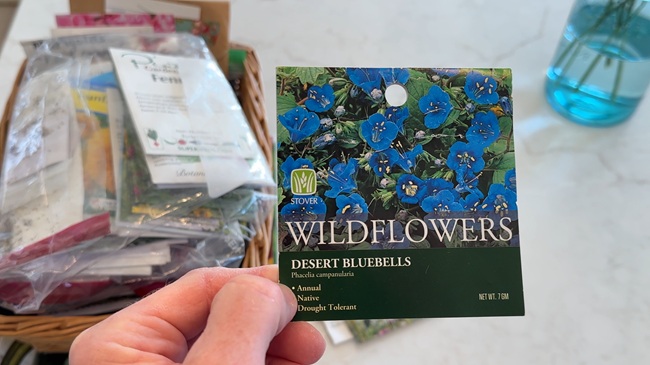
The first seed I choose each year is often one I discovered through reading. In 1947, Vita Sackville-West wrote about a combination of plants that created a brilliant blue effect in the garden. Among them was a plant she named as her favorite: Phacelia campanularia.
At the time, I had no idea what this plant was. Likely the point. Curiosity led me to learn that it’s a California native commonly called desert bluebells – an annual that’s easy to grow from seed.
When I first saw the seed packet, I wondered if the color had been enhanced. But when the flowers bloomed, I understood completely. They truly are that blue. It’s easy to see why Vita Sackville-West loved them.

The Carthusian Pink
If the first seed is about curiosity, the next is about story.
Carthusian pink (Dianthus carthusianorum) takes its name from the monks of the Carthusian order, established in 1084. The monks live a devout and hidden life, guided by a motto that translates to: The cross stands firm while the world turns.

That sentence alone was enough to draw me in.
I first grew this plant in my Michigan garden and knew immediately I wanted it with me in Kentucky. While researching it further, I came across a description from The English Rock Garden (1918) by Reginald Farrer—who clearly did not share my affection. He described the plant’s “lank ugliness” in terms that were almost comical.
“It’s lank ugliness is notorious, of tall naked stem, topped by a tight brown-calyxed head, from which spasmodically peep small spotty stars of magenta-rose or crimson.” (page 283 Vol 1)
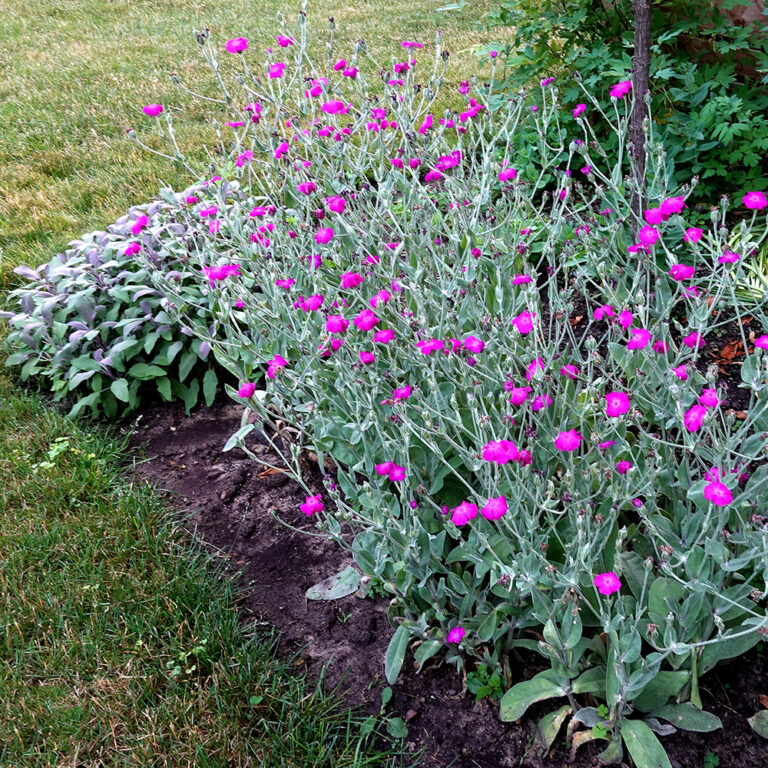
I disagree completely. The Carthusian pink reminds me that taste is subjective, and that meaning often outweighs fashion when it comes to growing flowers from seed.
The Structure of Blue Vervain
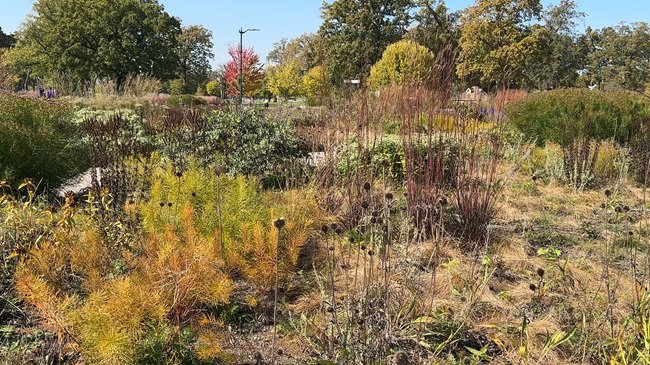
Another seed that earned its place came from a visit to the Oudolf Garden Detroit. There I noticed Verbena hastata, commonly known as blue vervain.
This perennial wildflower is native to North America and recognized for its tall, branching flower spikes and upright habit. While it’s beautiful in bloom, what truly captured my attention was how well it held its structure even after flowering.
A garden needs more than color. It needs form, persistence, and presence across the seasons. Blue vervain offers all of that, and for me, that makes it invaluable.
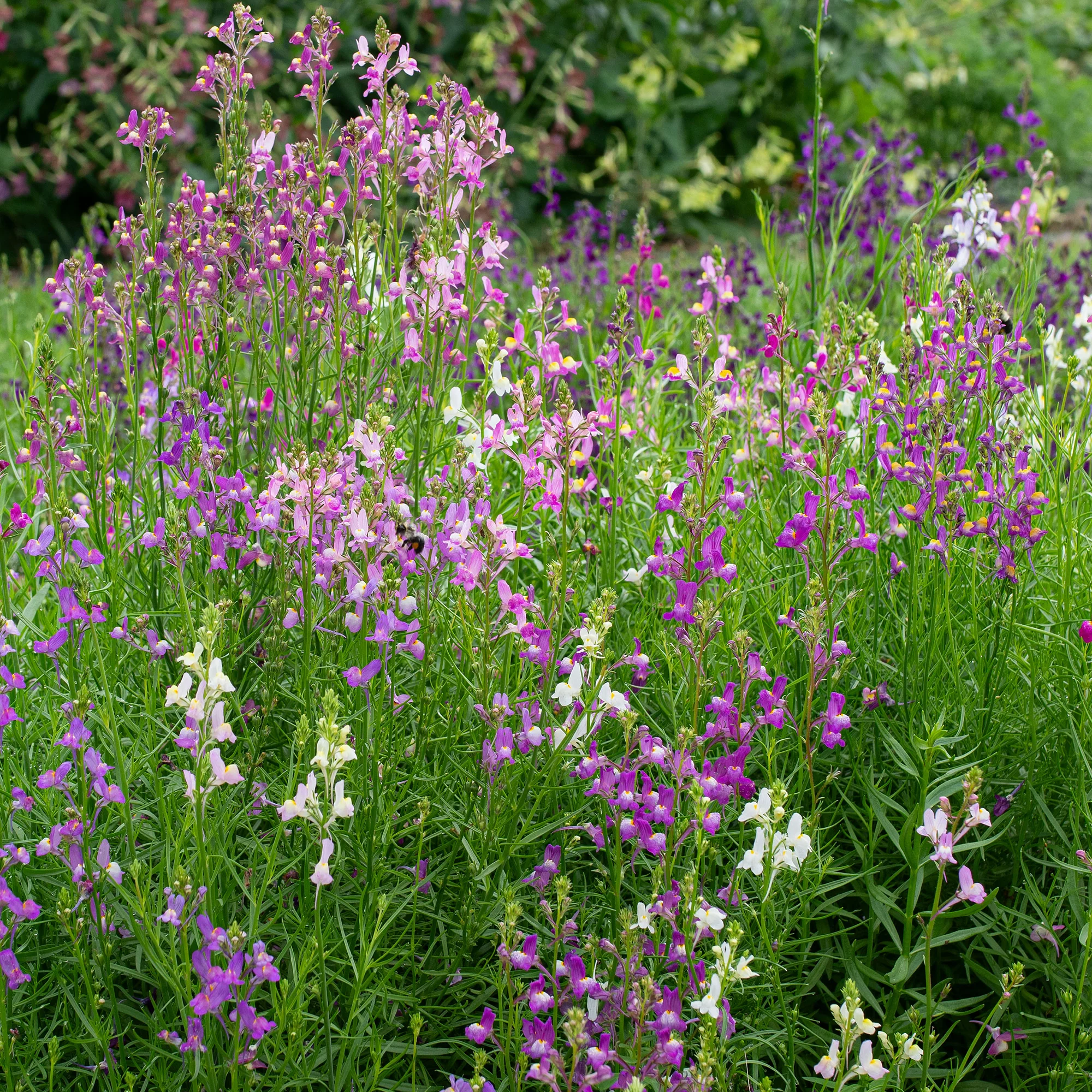
Linaria maroccana ‘Fairy Bouquet’
The final seed I want to share also came to me through the writing of Vita Sackville-West. In a 1950 article, she reflected on a childhood book titled Flowers That Do Not Disappoint—noting, with humor, that many of them did.
She went on to list annuals she believed truly earned their place in the garden. One of them was Linaria, specifically the variety known as ‘Fairy Bouquet.’
This annual toadflax should not be confused with invasive species. ‘Fairy Bouquet’ is a charming blend of small, brightly colored flowers held above airy foliage. It’s easy to grow from seed, can be direct-sown into the garden, and blooms in cool weather.
It attracts bees and butterflies and asks very little in return. That reliability alone makes it worth growing.
What Earns a Place in Your Garden
There are many more seeds waiting quietly off camera, but these are where I begin. They remind me that patience, attention, and care are what truly make a garden yours.
A garden doesn’t need to be filled with every seed from every catalog to be meaningful. It just needs to belong to you.
If you grow flowers from seed this year, I hope you take a moment to ask not just what you want to grow—but why. That question, more than anything else, is where a garden begins.