6 Important Garden Design Principles to Know
Thinking About Garden Design Principles
Have you ever noticed that some gardens feel extraordinary while others — even beautiful ones — don’t quite have the same effect?
You can walk into two spaces that look equally good on paper. Both might have attractive plants, quality materials, and thoughtful layouts. But one space invites you to linger, slow down, and explore. The other you admire briefly before moving on.
That difference is subtle, but it’s real. And once you start paying attention to it, you begin to notice that the spaces that truly stay with you are almost always doing something very deliberate.
Over time, I’ve become a little obsessed with understanding what that “something” is. It’s all about learning the garden design principles that help us create amazing gardens.
The Courtyard That Changed How I See Gardens
The moment that started me down this path happened on a cold winter afternoon in Detroit.
Like many gardeners in the middle of winter, I was dealing with a serious case of spring fever. The solution was obvious: a trip to a garden center.
I visited Fleur Detroit, a beautifully curated shop made up of two buildings connected by an outdoor courtyard. Because it was winter, I assumed I would walk quickly through that space on my way inside.
But the moment I stepped into the courtyard, I stopped. It was stunning.
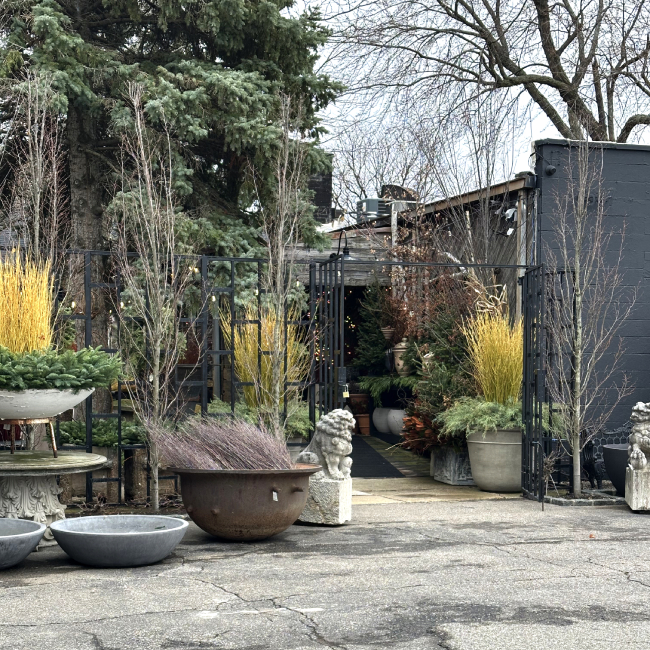

There were no flowers in bloom. Instead, the space was filled with terracotta pots, weathered garden ornaments, and plants arranged for sale. By typical garden standards, there wasn’t much there that should have been visually dramatic.
And yet the space felt extraordinary. There was a stillness to it — the sense that every object had been placed with intention. It didn’t feel like a retail display. It felt like a carefully composed outdoor room.
I wandered around that courtyard much longer than I expected, trying to understand why it worked so well.
Later, I realized I’d had that same feeling before in spaces like Detroit Garden Works and the beautifully designed retail gardens at Terrain. Each of these places creates an atmosphere that feels immersive and almost cinematic.
The more I thought about it, the more I realized something important: These spaces aren’t just attractive. They were designed to feel a certain way.
The Real Inspiration Behind Beautiful Garden Spaces
At first, I assumed the garden design principles behind these environments came from retail merchandising. But the deeper I looked, the more I realized that wasn’t quite true.
Many of the most compelling retail garden spaces are actually drawing inspiration from something much older: the garden room tradition found in historic landscape design.
You see this idea beautifully expressed in places like Hidcote Manor Garden and Sissinghurst Castle Garden. These gardens are organized as a sequence of outdoor rooms — each with its own sense of enclosure, focal point, and atmosphere. Each following important garden design principles.

1. Enclosure Creates Comfort
One of the most important garden design principles is enclosure.
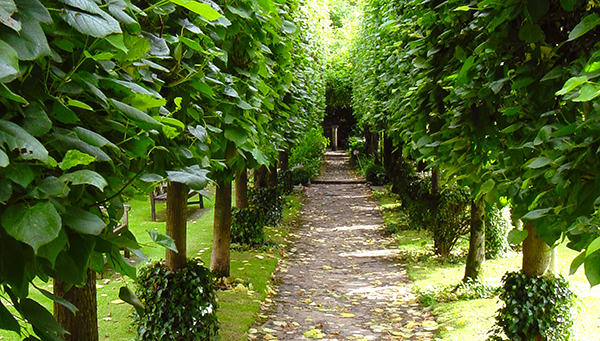
This refers to the relationship between the height of surrounding elements — hedges, walls, trees, or buildings — and the width of the space between them.
When those proportions feel right, the garden room feels comfortable and human-scaled. You feel held within the space rather than exposed. Camillo Sitte described this garden design principle in his 1889 book City Planning According to Artistic Principles. The D/H ratio (depth of a space : height of the space) should have at least a 1:1 ratio and not to exceed a 2:1 ratio. This ratio is what makes a space feel cozy.
Even the most beautiful planting can struggle to feel inviting if the spatial proportions aren’t working. That is why learning basic garden design principles is helpful for creating a cozy space.
Great gardens also guide visitors through sequences of compression and expansion. A narrow pathway might suddenly open into a courtyard or lawn, creating a rhythm that keeps the experience interesting.
2. Sightlines Shape the Experience
Another garden design principle that shows up again and again is what I think of as sightline choreography.
Great garden designers pay close attention to what a visitor sees from each important position in the landscape. A view across a courtyard. A framed path between hedges. A glimpse of a sculpture or fountain in the distance.
Often, these views are designed backward from a specific vantage point. Someone stood in that exact spot and asked, “What should the garden look like from here?” This approach creates moments of discovery and anticipation as you move through the space.

3. Layering Makes a Garden Feel Rich
Spaces that feel memorable almost always have a layered visual structure. This is a garden design principle that is often overlooked.
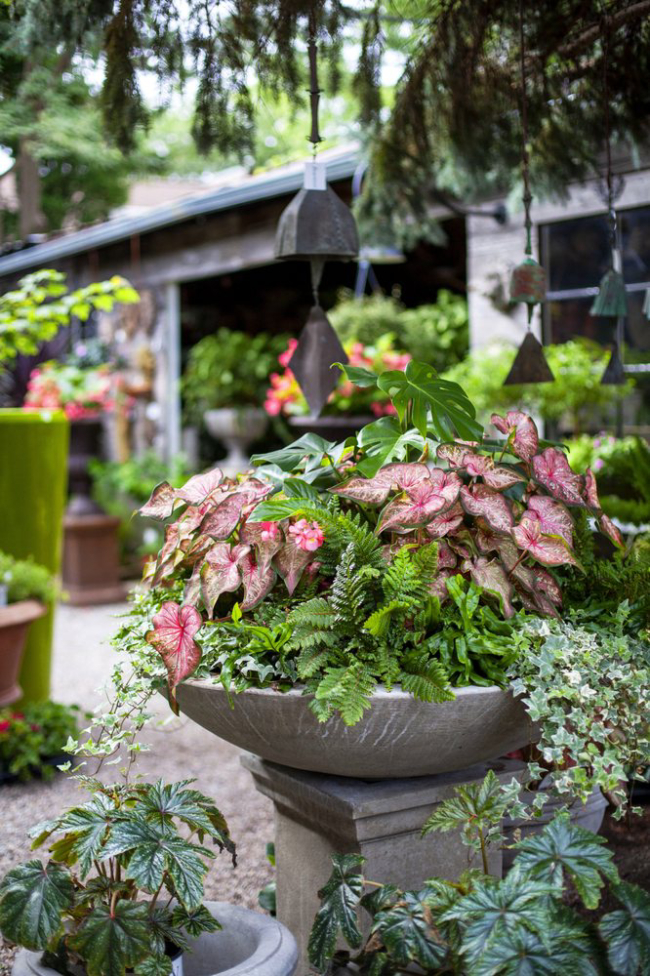
First, there’s an anchor element — a tree, sculpture, fountain, or architectural feature that grounds the scene. Next comes the supporting architecture that shapes the garden room.
Then there are character objects: benches, pots, garden tools, or potting tables that suggest life and activity.
Finally, there’s a detail layer — the small textures and objects that reward close attention. Gardens that feel thin usually have the anchor and the plants, but they’re missing those middle layers that create atmosphere and depth.
4. Sensory Design Creates Atmosphere
The most immersive gardens engage more than just the eyes. They layer multiple sensory experiences together: scent, texture, sound, and even temperature.
Think about the smell of damp soil, the sound of gravel underfoot, or the cool shade beneath a tree canopy.
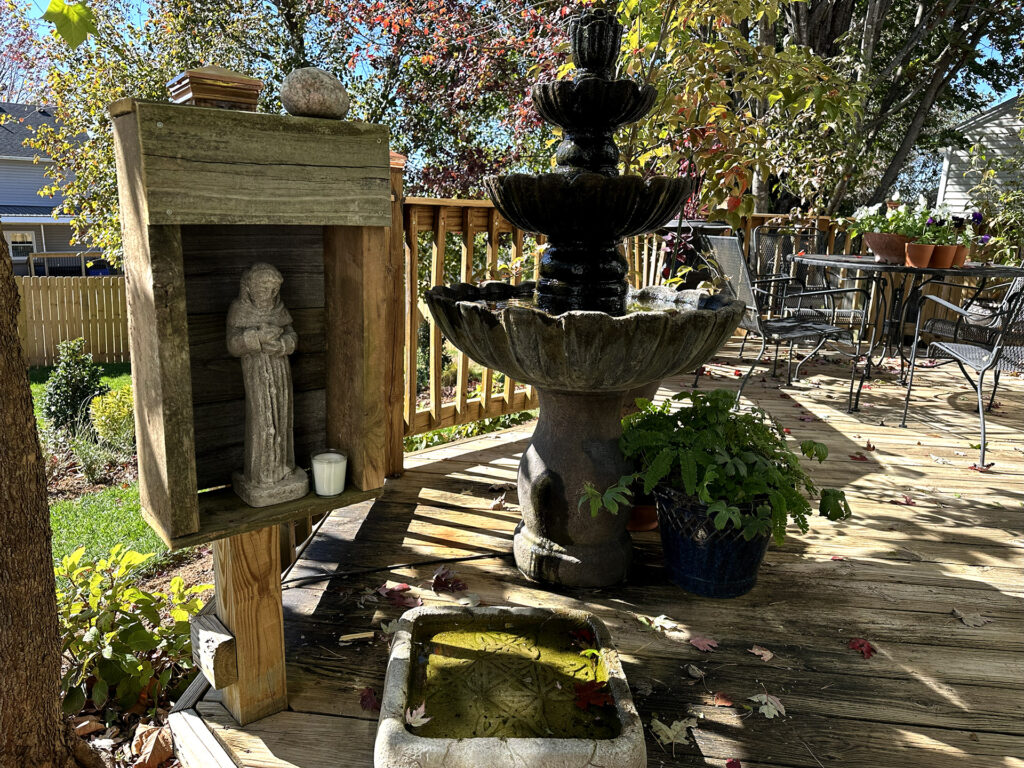
Water can also play a powerful role. Still water creates reflection and calm, while moving water introduces gentle sound that shapes the mood of a space.
Lighting matters too. Warm pools of light combined with deeper shadows often create the most atmospheric garden environments.
Even microclimate — sun, shade, wind protection, and humidity — influences how comfortable a space feels.
5. Gardens Tell Stories
The most memorable landscapes also have a sense of narrative. Often there’s a single emotional idea guiding the space — something romantic, peaceful, abundant, or slightly wild. Everything in the garden supports that mood.
The most compelling gardens feel as if you’ve arrived in the middle of a story. A muddy trowel left on a potting bench. A stack of terracotta pots waiting to be used. A chair that looks recently occupied.
These small details make the garden feel lived-in rather than staged. Natural aging contributes to that feeling too. Mossy stone, weathered wood, and sun-bleached terracotta give a garden depth and authenticity.

6. Gardens Are Designed in Time
Unlike most designed environments, gardens change constantly. Plants grow, seasons shift, and the landscape evolves year after year.
Successful gardens account for this fourth dimension: time.
They rely on plant communities rather than isolated specimens. They balance structure and wildness. They welcome wildlife like birds, bees, and butterflies.
Many also incorporate borrowed landscape, framing views beyond the garden boundary so distant trees, buildings, or sky become part of the composition.
And perhaps the most important garden design principle, they unfold as a sequence of spaces — revealing and concealing elements as visitors move through the garden.

Designing My Garden at Sugar Hill
All of these ideas are shaping how I’m thinking about the garden I’m creating at Sugar Hill. Right now, the landscape is mostly a blank slate. But that’s actually an exciting place to start.
Instead of rushing to a finished design, I’m in the phase of gathering inspiration — studying spaces that create the feeling I want to capture.
The gardens at places like Fleur Detroit or Detroit Garden Works remind me that great landscapes aren’t just about plants or objects. They’re about experience.
I don’t know exactly what Sugar Hill’s garden will look like yet. But I do know what I want it to feel like. And that’s where great garden design always begins.