
gardening is a serious creative discipline.

It started with a friend and a handful of perennial divisions.
She was dividing plants from her own garden and offered me some. I was newly married with a new house. I grew up watching my mother and grandmother garden — so the plants were familiar, but the garden was mine for the first time. They grew. They looked beautiful. And something that had been quiet in me for a long time stopped being quiet.
I wasn’t thinking about artistic gardens then. I wasn’t thinking about design philosophy or color theory or the long tradition of people who had made extraordinary things from soil and time. I was just growing beautiful flowers and finding that I couldn’t stop thinking about them.
Then I went to England. Hidcote Manor. Sissinghurst Castle. Kiftgate Court.
I walked through those gardens and felt something shift — the feeling of encountering a thing that shows you what’s possible. These weren’t just beautiful places. They were complete worlds, each one created by someone who decided, with full commitment and without apology, to make something extraordinary.
Standing there, I kept asking the same question: why aren’t more Americans gardening like this? That question is what Garden Moxie is trying to answer.

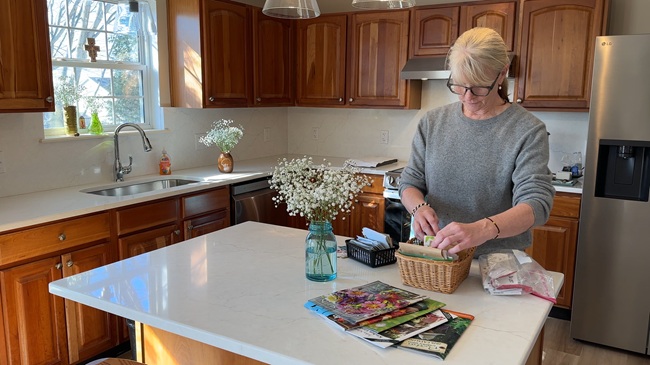
I’m a mechanical engineer who traded a career solving other people’s problems for twenty acres of cattle-grazed land in Kentucky. My husband and I are building a new home there — we’re calling it Sugar Hill. It will take ten to twenty years for the garden to become what I can see in my mind, and that timeline, which once felt daunting, now feels like the whole point.
In the meantime, I’m experimenting in a small temporary plot called Rabbit Run, where I’m learning to grow in Kentucky’s heavy clay soil, testing plant combinations before committing those decisions to Sugar Hill. I document everything — the failures as carefully as the successes, the revisions as carefully as the plans.
The gardeners I study are the ones who treated this as a serious craft and left behind a body of work still worth learning: Gertrude Jekyll, who worked the garden like a painter working a canvas. William Robinson, who championed wildness at a time when it was considered improper. Vita Sackville-West, who built Sissinghurst around romance and an unapologetic passion for plants. Beth Chatto, who understood that the right plant in the right place was its own kind of philosophy. Rosemary Verey, who proved that a small garden could contain an entire world.
These were not people who gardened. They were artists. That is what I’m after — and what Garden Moxie is built around. If you have always felt the pull of a great garden, you are in the right place.

Garden Moxie Field Notes is a letter that arrives every other week. Part seasonal diary, part deep dive into the history and art of the garden world. For those who feel the pull of a great garden.